The firebox is laid up from standard firebricks. Standard firebricks
are 4 ½" wide by 9" long by 2 ¼" thick. The
thickness will vary between 2 ¼" and 2 ½" depending
on the supplier. Since the Heat-Kit is designed around the standard firebrick
module, it is important to check the width and length of your bricks beforehand,
to avoid having to make modifications to the assembly procedure.
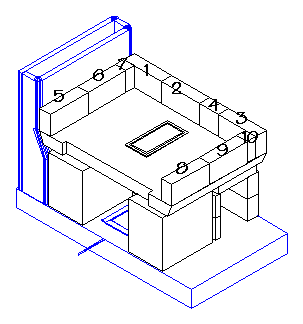
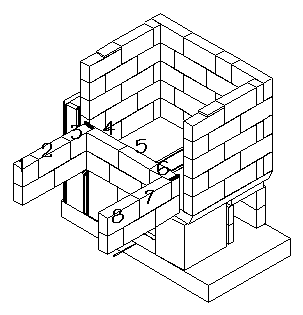
The firebox consists of two shells of firebricks set on edge. This allows
the inner shell to be a field replaceable firebox liner. The firebrick
installation sequence has been numbered. By following this order, you maximize
the ability to "bury" odd lengths where they don't show and reduce
the amount of precise cutting that you have to do. Note that full contact
between inner and outer shell is not required at the inside corners. Where
convenient, a little play right at the corner provides some expansion room
for the liner.
Firebricks are laid up with clay (refractory) mortar with thin joints.
Only enough clay needs to be used to completely fill the joint. No joint
thickness needs to be built up - you are only filling in gaps and irregularities
between the bricks. Joints can be trowelled or dipped. We recommend dipping
(unless the bricks are wet, in which case it is difficult and trowelling
is easier). It looks messy, but the cleanup is easy later with a sponge.
You can tell if the mortar has the right consistency by setting a brick
down in a bucket of mortar. It will sink about half way. We like to dip
the bricks and also keep a margin trowel handy for the odd bit of trowelling
(old habits are hard to break).
 |
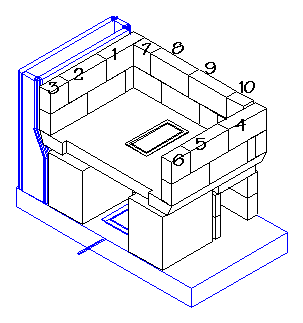 |
| Lay up firebox as indicated, using air setting refractory mortar. Line
up back corners with the leads that are precast into the lower channels
(right channel deleted from drawings for clarity). |
Exact bond is dependent on firebrick thickness, generally between 2-1/4"
and 2-1/2". |
 |
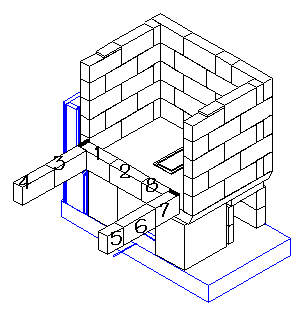 |
Top front firebricks are notched 1/4" x 4-1/2" for firebox
lintel.
|
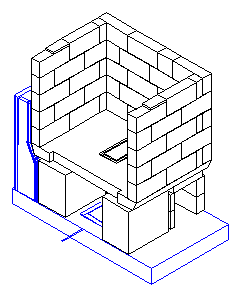
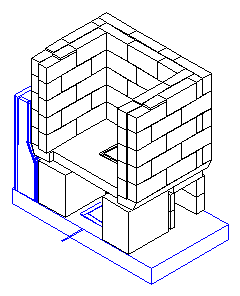
Install firebox liner with indicated bond. Depending on firebrick thickness,
some adjustments may be needed in corners. It is desirable to leave a 1/16"
- 1/4" gap wherever a butt end meets an inside corner, indicated above
by dark shading. |
 |
|
|
|
 |
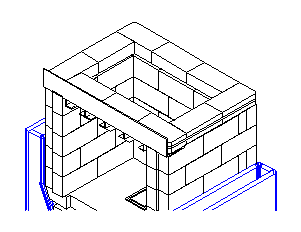 |
| Notch top course of liner as shown. Lay a strip of paper on top of
last liner course to act as a bond break This will ease liner replacement,
in case it ever becomes necessary. |
Install firebox lintel. Brackets on lintel are for heat shields (firebrick
splits).
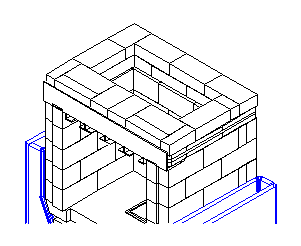
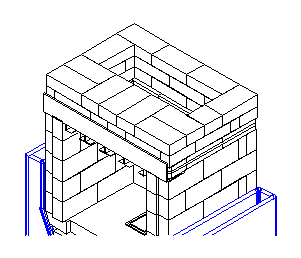
Lay up next course as shown. Use a dry joint with lintel. This course can
be strapped as shown, but this is optional. If a strap is used, then round
outside corners of bricks slightly. |
 |
 |
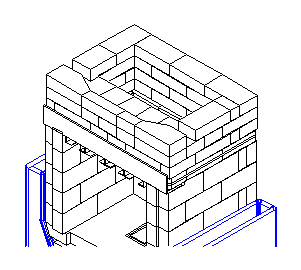
| All cuts shown are soaps (bricks ripped lengthwise) and/or 3/4 bricks
|
Next course. |
 |
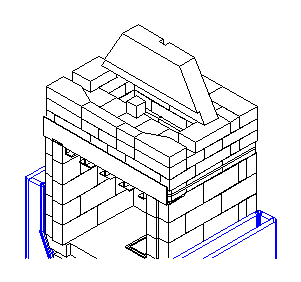 |
| Note: both front corner bricks on this course can be cut from one brick,
rather than using a half as shown. Leave oven floor heat bypass gaps as
shown. Standard gap is 2 ½ inches. |
Note: small revisions to oven design are still being made. Contact
us for latest drawings before you build.
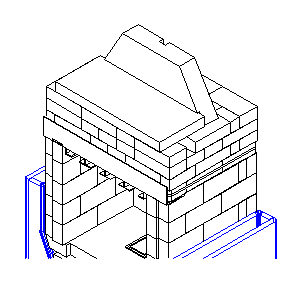
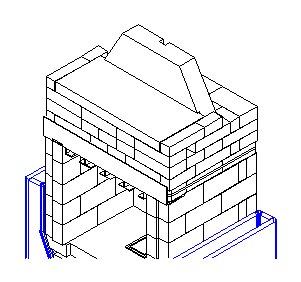
Install oven back as shown. Leave a 3½ inch channel behind. Install
small floor support piece as shown. |
 |
 |
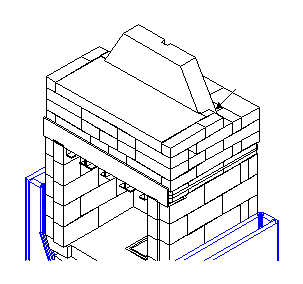
| Install oven floor as shown. Set floor into Sairset. Inset into relief
in oven back (not shown). Slightly tilt oven back to the rear and insert
¼ inch stove rope into joint between floor and back. |
Install soaps as shown. Leave 1/16" inch gap at top between soaps
and oven floor. |
 |
|
Install small wedge cuts (supplied) where shown.
(Continued) |
|